
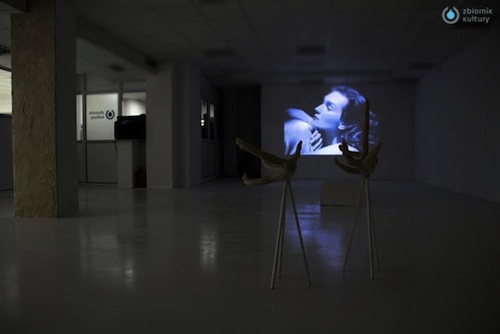
Author: Wojciech Szymanski
Napoleon to Madame Walewska
What do we care about a woman who died nearly two hundred years ago, about whom we know almost everything and hardly anything? A woman who impulsively loved Napoleon perhaps and perhaps she didn’t love him at all. A woman who was loved by Napoleon and perhaps she was not. Perhaps, the Emperor of Frenchmen was writing down only his spicy and juicy love letters to her whereas they were written by an anonymous secretary. She was a mother of her husband’s child perhaps. Perhaps she was not and a chamberlain Walewski was an ordinary cuckold. Perhaps chamberlain Walewski, who was her elder by only half a century, this old fool, Pole-Sarmatian who appeared on the eve of modern life just by chance, the life that he was not able to understand, this provincial and looser consented her to do what she did. He didn’t perhaps. Perhaps Paris, perhaps Rome…
What do we care about Madame Walewska’s life which is as simple as a Biblical parable but, at the same time, thanks to its story-tellers’ several rhetorical and preachy tricks gets some polish of sentimental kitch, jingoistic twaddle concerning duties and self-sacrifice or a writer-impotent’s wanking orgy? As it is in a parable, every detail of her life depends on appropriate interpretation of a sign. Let’s take into consideration Madame Walewska’s alleged meeting with Tadeusz Kosciuszko. We know only one thing: he picked a red and white bow from her chest. He kissed this fetish, according to ones, or he threw it out, according to others. Perhaps, both stories are pulp fiction only, however both of them tell us a lot about the Polishness as a kind of (bedroom) situation.
Whether Madame Walewska was giving herself to Napoleon for the sake of Poland or not, and whether her sexual intercourses with Zeitgeist am Pferd were the acts of patriotism, are not interesting for us at all. Her red and white bow itself, as a place where politics, history and sex interweave, seems to be much more interesting. The red and white bow torn from her chest by a national hero’s hand is confusing for black and white politics of history which is not able to manage with a breast that belongs neither to a Mother-Pole, nor to a Virgin-Hero.
That’s the reason why Madame Walewska’s bow, her breast and she herself are able to liberate us from common “God-Honour-Homeland” formulas. Madame Walewska is a pure eroticism which has to be juxtapose with politics. She is an erotic history which may replace our former politics of history, she is – last but not least – eroticism versus patriotism and promiscuity contra solidarity.
When seized by fear and sexual arousal Madame Walewska fell at her French lover’s feet she whispered her erotic-political declaration: “Aren’t we all orphans? I will dress myself in pink when you revive us”.